
by Brea Cunningham
Museums often present history in objects, photographs, and carefully written panels. But sometimes history arrives in a different form. Sometimes it walks through the front door and invites people to talk with one another.
Over the course of Joshua Harris-Till’s visit to Minnetrista, that is exactly what happened.
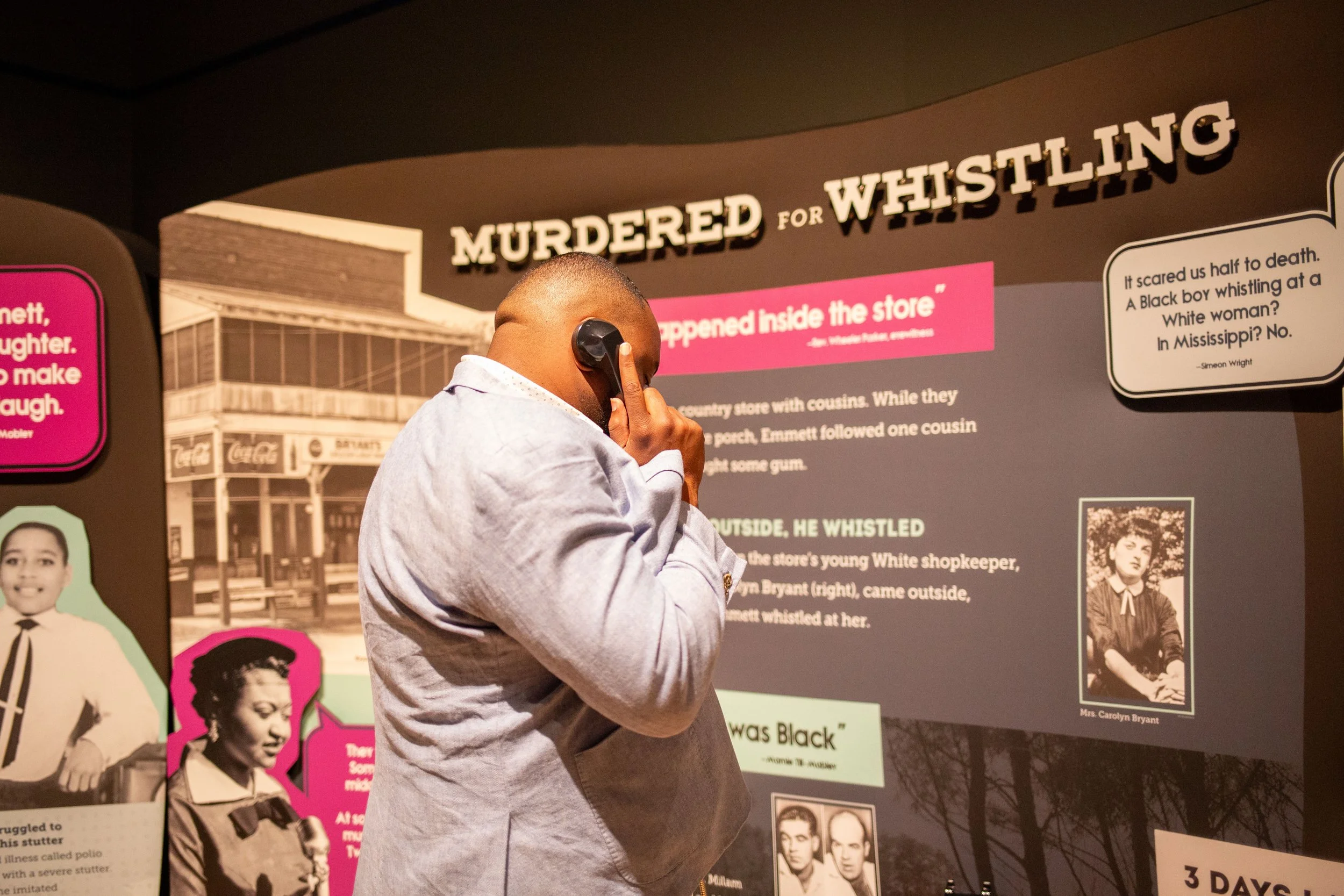
From March 12–17, Harris-Till, cousin of Emmett Till, came to Muncie to participate in a series of programs connected to the exhibition Emmett Till & Mamie Till-Mobley: Let the World See. His purpose was to share his family’s story and reflect on the lasting impact of one of the most pivotal moments in American civil rights history.
What unfolded during the weekend became something more than a series of scheduled programs. It became a reminder that history is not static. It lives in the people who carry it forward and in communities willing to listen.
The visit began with an intimate staff coffee talk, where Harris-Till spent time with Minnetrista team members before public programs began. It created space for staff to ask questions, engage in conversation, and reflect together. He spoke about the importance of collaboration and the role each person plays in carrying stories forward, setting the tone for the days ahead.
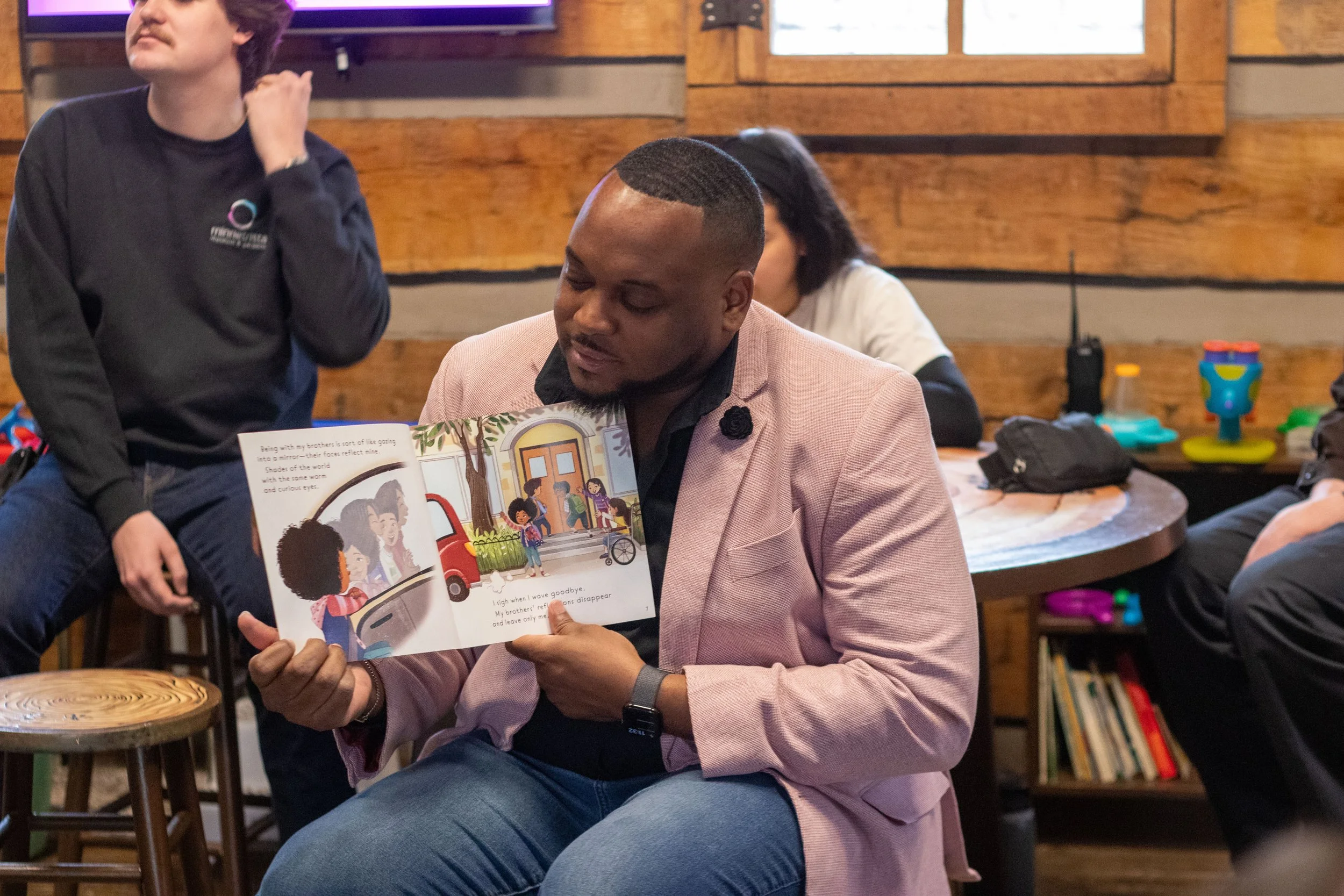
That sense of connection carried into the first public program. In Betty’s Cabin, children and families gathered for Storytime Saturday as Harris-Till read More Than Peach by Bellen Woodard.
Young listeners leaned in while parents sat nearby, sharing the quiet rhythm of a story. In that moment, the conversation about identity and belonging felt simple and natural, introduced through curiosity, color, and the shared experience of a story.
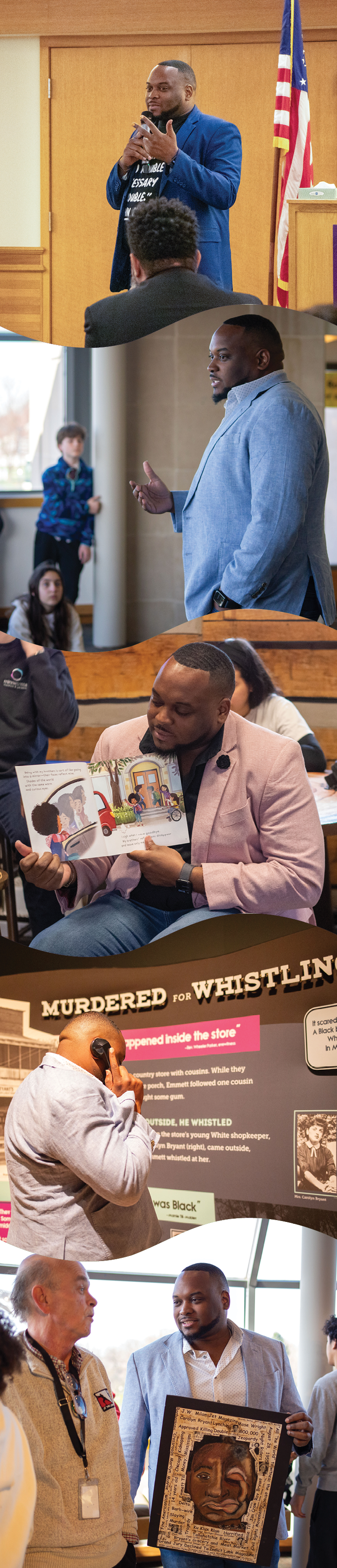
Later that evening, guests gathered in the Indiana Room for History Bites: An Evening with Joshua Harris-Till. Through personal storytelling, Harris-Till spoke about the legacy of Emmett Till and Mamie Till-Mobley and the ways that legacy continues to shape conversations about justice, courage, and remembrance. The room listened closely, reflecting on how a single story can echo across generations.
The most powerful moment of the weekend came during Sunday’s program, Shared Stories, Legacy, and Community. What began as a structured discussion slowly opened into something more organic and deeply human. Harris-Till invited the audience into dialogue. People spoke honestly about their experiences and their perspectives. Strangers listened to one another with a level of attention that felt rare and meaningful. In that moment, the exhibition extended beyond the gallery walls. The story it holds became something shared across the room.
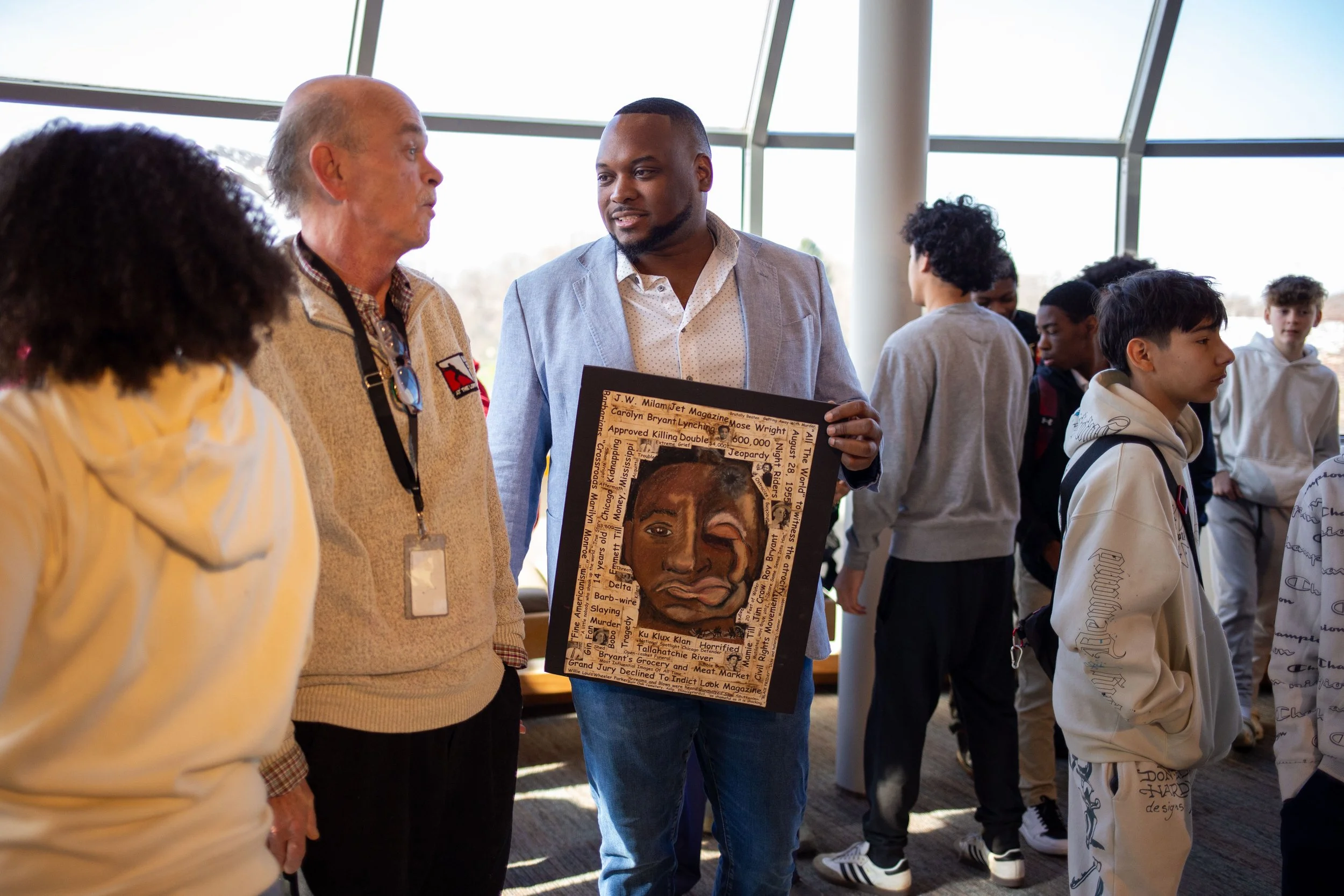
During his time in Muncie, Harris-Till also met with students, nonprofit leaders, and community organizations. Each conversation continued the same theme: that remembrance is not only about looking back. It is about understanding how history shapes the communities we are building today.
Joshua Harris-Till came to Minnetrista to speak about his family’s legacy. He did that with remarkable generosity. But over the course of the weekend, something else happened. Conversations opened. Strangers listened to one another. Community members shared stories they may not have expected to speak aloud.
Harris-Till left something lasting behind–not just the memory of a visit, but a reminder that dialogue has the power to shape communities. In many ways, he helped strengthen Minnetrista’s legacy as well, as a place where stories are shared, conversations are welcomed, and where history continues to walk through the door in the voices of the people gathered inside.