
for educators
School Tours
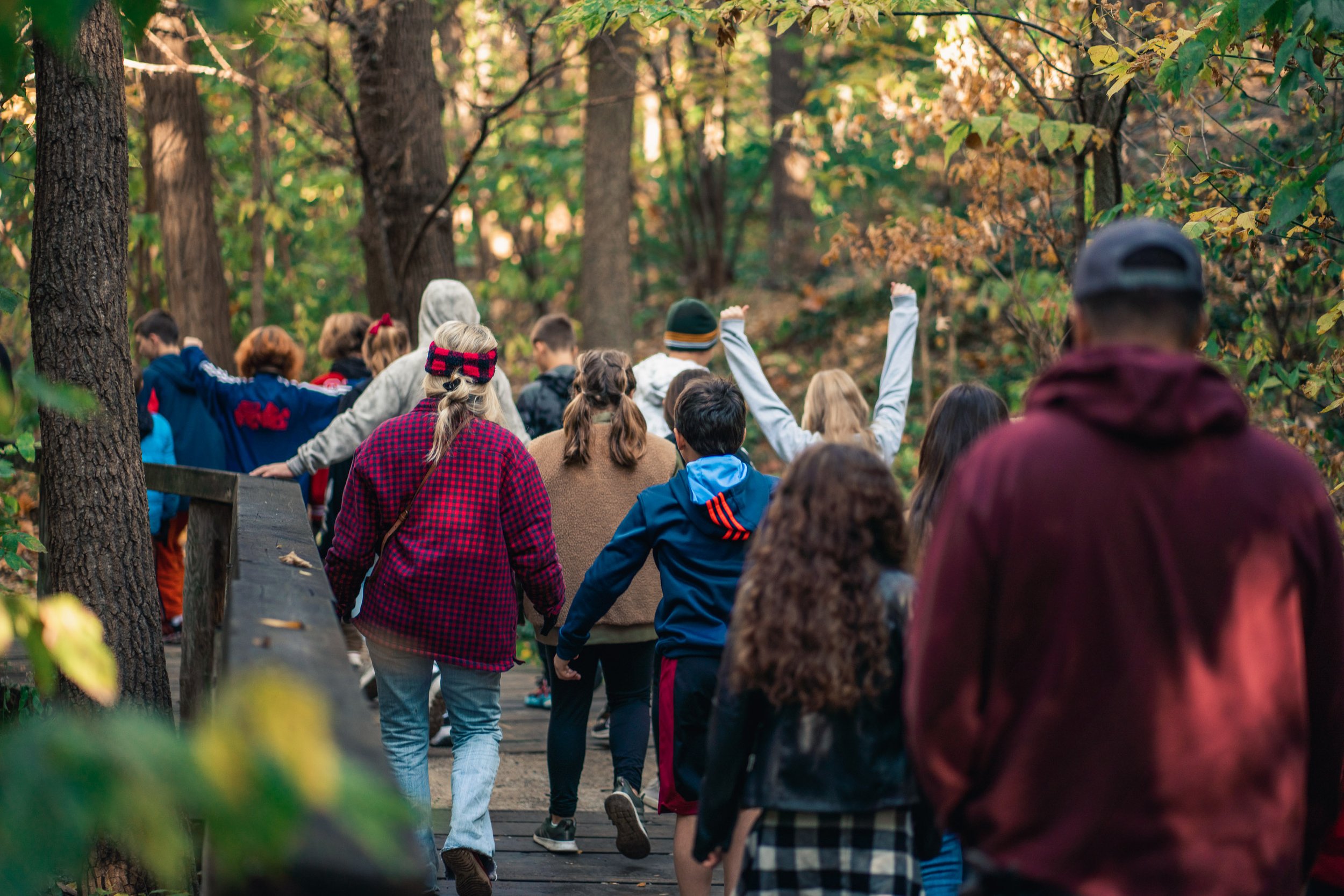
Minnetrista offers a variety of multi-disciplinary school tours for Grades Pre-K through 5. These programs are active and engaging, while also standards-based and content-rich for your educational demands. Minnetrista is the perfect place for homeschooling families to gain alternative educational experiences! Check out the age-appropriate school tours below to get started.
School Tour Details
60 Minute Experience
Available for Pre-K
Cost: $5/student
One guided tour
Lunch space (must reserve)
Exhibition/gallery time (guided) additional $2/student
Half Day Experience
Available for grades K & up
Cost: $5/student
One guided tour
Lunch space (must reserve)
Full Day Experience
Available for grades K & up
Cost: $7/student
Two experiences (guided tours or exhibition walk through)
Lunch space (must reserve)
Visit The Orchard Shop
Exhibition Experience
Available for Pre-K & up
Cost: $5/student
Exhibition/gallery time
School groups must have ten students to book a school tour program. There must be a minimum of one adult for every ten students. Teachers & Staff are admitted at no charge. One chaperone is free for every five kids. $8 will be charged for additional chaperones. For homeschool groups, 1 adult per 10 students is admitted free as a teacher, 1 adult per 5 students is admitted free as a chaperone, and all additional adults are $8 each.
Minnetrista can accommodate up to approximately 120 students per tour. Groups exceeding this capacity may be considered on a case-by-case basis so please reach out.
We have field trip scholarships available for Delaware County Schools when the number of students participating in the free/reduced lunch program is fifty percent or higher. Ask about this opportunity when you email schooltours@minnetrista.net or call
765.287.3552 to book your visit.
School Tour Programs


Pre-K Tour Programs (60 minutes each)
Johnny Appleseed
September–November
Johnny Appleseed knew that tiny seeds had great potential. On this tour, students will learn that although small in size, an apple seed has the potential to grow into a magnificent tree. Each seed and apple holds great possibility to become many different things.
-
Meet Johnny Appleseed in person
See a modern cider press; use a hand-crank press to make cider, then taste-test the results
Use their five senses to learn about different apples and the trees they grow on
Receive an apple to take home (While supplies last)
-
Understand that Johnny Appleseed was a real figure in history
Use their five senses to determine differences in both trees and apples
Examine and understand how machines have changed over time
Understand that a tree and the fruit that grows on it is a living thing
Grades K–2 Tour Programs (90 minutes each)
Garden Detectives
June–August
Become a garden detective at Minnetrista! Students will follow clues to identify plants, animals, insects, and more in our gardens and discover how life grows and works together.
-
Students will explore several Minnetrista Gardens
Students will get to plant a seed to take home
Students will learn about the life cycle of snails
-
Students will learn by participating in educational hands-on-activities
Students will explore the life cycle of a snail
Students will learn that plants, insects, and other animals are important to one another
Students will understand that plants need sunlight, water, and soil to grow
Nature Adventure
June–August
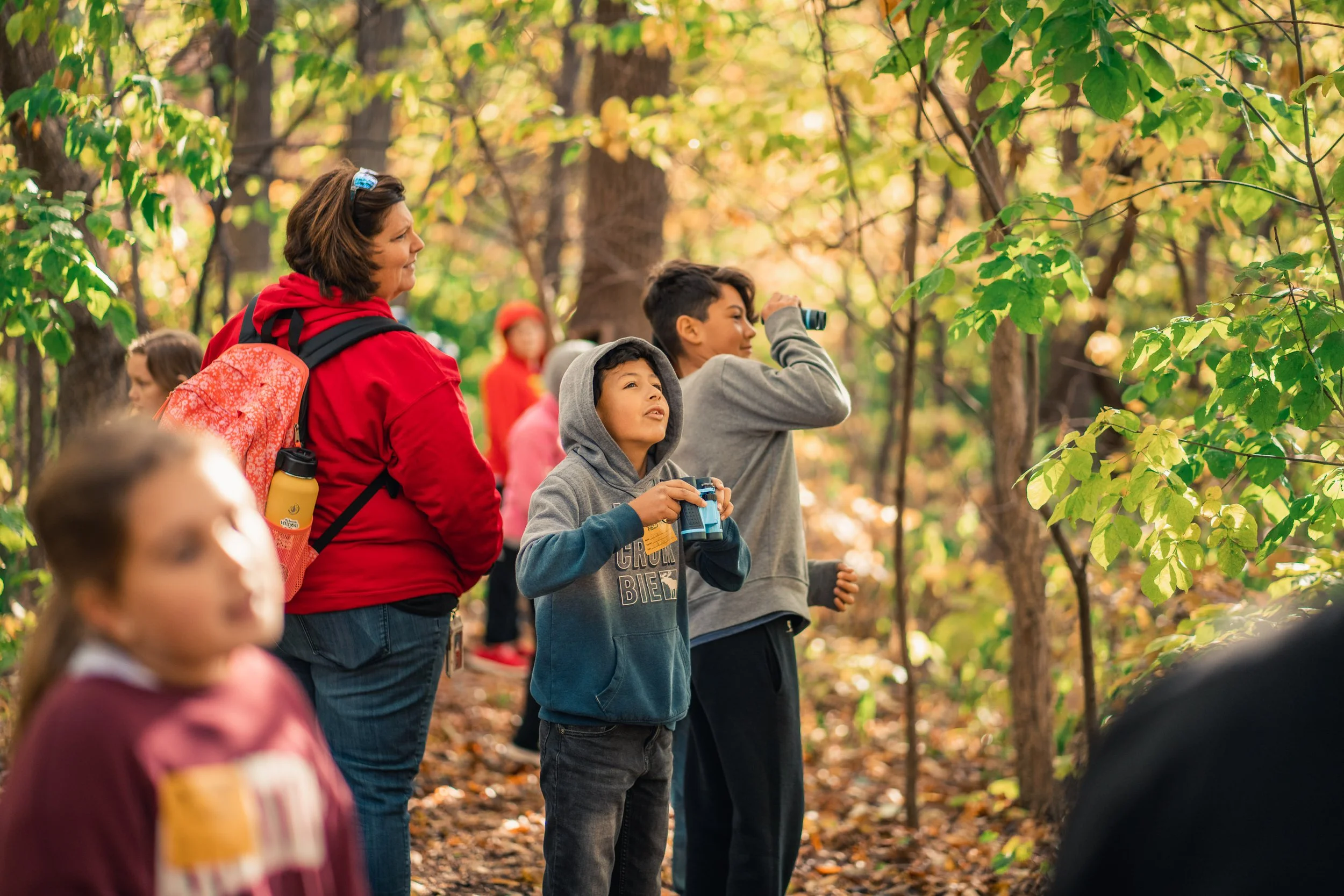
Embark on an exciting adventure at Minnetrista's Nature Area! Students will delve into Indiana’s three distinct habitats—wetland, woodland, and prairie. They will engage in bird-watching, identifying various species, and enjoy a thrilling scavenger hunt.
-
• Students will hike along trails in Minnetrista’s Nature Area
• Students will engage in activities to learn about plants and animals native to Indiana
• Students will explore Indiana’s three main habitats: wetland, woodland, and prairie
-
• Students will learn the similarities and differences between some of Indiana’s birds.
• Students will learn which animals live in which habitat
• Students will learn that animals and plants have adaptations that help them to survive
Backyard Ecology
April–May
Pairs well with:
Tours—Creepy Crawlies
Step into the buzzing world of Backyard Ecology at Minnetrista! Students will be immersed in hands-on activities, from planting seeds to exploring seed dispersal mechanisms. They'll uncover the interdependence of plants, insects, and animals and gain a deeper appreciation for the natural world.
-
Students participate in game based educational hands-on-activities
Students will learn by exploring Minnetrista’s gardens and grounds
Students will get to plant a seed to take back to class with them
-
Students will learn by participating in game based educational hands-on-activities
Students will explore the life cycle of a plant
Students will learn that plants, insects, and other animals are important to one another
Students will understand that plants need sunlight, water, and soil to grow
-
Kindergarten
Life Science: K.RV.2.2, K-LS1-1, K-ESS3-1, K-ESS2-2., K-ESS3-1, K-ESS3-3.
Language Arts: K.SL.2.1, K.SL.4.3., K.SL.2.3, K.SL.2.5, K.SL.3.2, K-ESS2-2.
Mathematics: K.NS.10 , K.G.2, K.G.2
First Grade
Life Science: 1-LS1-1, 1-LS1-2.,1-LS3-1
Language Ats: 1.SL.4.1, 1.SL.4-2, 1.SL.4.3 , 1.SL.2.3
Mathematics: 1.DA.1 , 1.G.1,
Second Grade
Life Science: LS2-1., 2-LS2-2., 2-LS4-1.
Language Arts: 2.SL.2.1, 2.SL.2.3, 2.SL.2.4, 2.SL.3.2, 2.SL.4.3
Mathematics: 2.G.1
Johnny Appleseed
September–November
Pairs well with:
Tours—Creepy Crawlies
Johnny Appleseed’s stories and antics will captivate your class. Your students will explore Minnetrista’s history with apples through a behind-the-scenes look at our cider-making process.
-
Meet Johnny Appleseed in person
Students will learn the parts of an apple tree by using props to transform themselves into one
See a modern cider press; use a hand-crank press to make cider, then taste-test the results
Explore the life cycle of an apple
-
Realize that small things have great potential
Understand that Johnny Appleseed (actually John Chapman) was a real figure in history
Use their five senses to determine differences in both trees and apples
Examine and understand how machines have changed over time and have impacted how we get the goods we need and want
Understand that a tree and the fruit that grows on it is a living thing with many parts
-
Kindergarten
Social Studies: K.1.1, K.1.2, K.1.3, K.2.3, K.2.4, K.2.2, K.3.2, K.3.3, K.4.2
Language Arts: K.SL.2.1, K.SL.4.3., K.SL.2.3, K.SL.2.5, K.SL.3.2, K-ESS2-2
First Grade
Social Studies: 1.1.1, 1.1.3, 1.1.4, 1.1.8, 1.2.2, 1.2.3, 1.3.3, 1.3.9
Language Arts: 1.SL.4.1, 1.SL.4-2, 1.SL.4.3 , 1.SL.2.3
Second Grade
Social Studies: 2.1.1, 2.1.2, 2.1.3, 2.2.5, 2.4.2, 2.4.7
Language Arts: 1.SL.4.1, 1.SL.4-2, 1.SL.4.3 , 1.SL.2.3
Creepy Crawlies
September–November; April–May
Pairs well with:
Tours—Habitat Hunters
Kids are often afraid of spiders, touchy about insects, and spooked by things that crawl. This program will bring your students up close and personal with the amazing and important world of nature’s most prominent, yet misunderstood, animal populations.
-
Search for live creepy crawlies in our garden spaces
Identify the differences between insects, arachnids, and other crawlies with our model collection
Through active play they will learn that insects have important jobs to do
Explore the development stages of the monarch butterfly then take part in a metamorphosis relay to become butterflies
Use flashlights to decode the secret world of firefly communication
-
Understand that not all creepy crawlies are the same
Identify anatomical differences
Discover the life cycle differences of various crawlies
Identify basic characteristics used for scientific classification
Learn that entomologists are scientists who study insects and similar creepy crawlies
Identify the role that creepy crawlies can play in our lives and ecosystems
-
Kindergarten
Life Science: K.RV.2.2, K-LS1-1, K-ESS3-1, K-ESS2-2., K-ESS3-1, K-ESS3-3.
Language Arts: K.SL.2.1, K.SL.4.3., K.SL.2.3, K.SL.2.5, K.SL.3.2, K-ESS2-2.
Mathematics: K.NS.10 , K.G.2, K.G.2
First Grade
Life Science: 1-LS1-1, 1-LS1-2.,1-LS3-1
Language Arts: 1.SL.4.1, 1.SL.4-2, 1.SL.4.3 , 1.SL.2.3
Mathematics: 1.DA.1 , 1.G.1,
Second Grade
Life Science: 2-LS2-1, 2-LS4-1, 2-LS2-2.
Language Arts: 2.SL.2.1, 2.SL.2.3, 2.SL.2.4, 2.SL.3.2, 2.SL.4.3
Mathematics: 2.G.1
Habitat Hunters
September–November; April–May
Pairs well with:
Tours—Creepy Crawlies
Explore three of Indiana’s natural habitats in the Minnetrista Nature Area—tallgrass prairie, woodland, and wetland. By applying observation skills, using scientific tools, and playing games, your students will discover the importance of each of these habitats and the plants and animals that call them home.
-
Explore the tall grass prairie to learn how things live above ground and underground
Use binoculars and listen to bird calls in the woodland to compare how some birds are alike and how they are different
Learn about the frog’s life cycle and the adaptations that help it survive
Participate in activities to understand how plants and animals in different habitats are interconnected
-
Identify the three dominant habitats in Indiana
Understand that habitats are interconnected
Realize that living organisms include plants and animals
Understand that tools can help us to better observe and understand the world around us
Discover that exploration is a fun and scientific process
-
Kindergarten
Life Science: K.RV.2.2, K-LS1-1, K-ESS3-1, K-ESS2-2., K-ESS3-1, K-ESS3-3.
Language Arts: K.SL.2.1, K.SL.4.3., K.SL.2.3, K.SL.2.5, K.SL.3.2, K-ESS2-2.
Mathematics: K.NS.10 , K.G.2, K.G.2
First Grade
Life Science: 1-LS1-1, 1-LS1-2.,1-LS3-1
Language Arts: 1.SL.4.1, 1.SL.4-2, 1.SL.4.3 , 1.SL.2.3
Mathematics: 1.DA.1 , 1.G.1,
Second Grade
Life Science: 2-LS2-1, 2-LS4-1, 2-LS2-2.
Language Arts: 2.SL.2.1, 2.SL.2.3, 2.SL.2.4, 2.SL.3.2, 2.SL.4.3
Mathematics: 2.G.1
Grades 3–5 Tour Programs (90 minutes each)
Garden Detectives
June–August
Become a garden detective at Minnetrista! Students will follow clues to identify plants, animals, insects, and more in our gardens and discover how life grows and works together.
-
Students will explore many of Minnetrista’s beautiful gardens
Students will get to plant a seed to take home
Students will discover how a snail’s shell serves as its home and how its slimy trail aids survival. Then, they’ll create their own slime goo!
-
Students will learn by participating in educational hands-on-activities
Students will understand animals have adaptations that help them to survive
Students will learn that plants, insects, and other animals are important to one another
Students will understand that plants need sunlight, water, and soil to grow
Community Growth
September–November; April–May
Pairs well with:
Tours—Nature Connection
Students will explore water as a crucial natural resource for human survival. Using historical objects, dioramas, and water table models, they will explore how technology, land, and communities change overtime and how we can solve environmental issues.
-
By using a watershed model, students will learn how communities can protect their natural resources
Observe how a community changes over time
Identify the importance of rivers to early communities
Use artifacts to understand how life in the early 1900s was different and similar from today
-
People in communities depend on one another
Communities change over time as resources and population distribution changes, but pieces of a community’s origins often remain
Models and simulations help us to understand and see real things by providing visual aid
We are all part of a community
-
Third Grade
Social Sciences: 3.1.1., 3.1.2, 3.1.3, 3.1.4, 3.1.6, 3.1.8 ,3.1.9, 3.2.5, 3.3.11, 3 .3.12 , 3.3.13 ,3.4.3
Life Sciences: 3-ESS2-3, ESS3-1, 3-5.ETS1-1, 3-5.ETS1-2, 3-5.ETS1-3.
Language Arts: 3.SL.2.3, 3.SL.2.5, 3.SL.4.3
Fourth Grade
Social Science: 4.1.1, 4.1.2., 4.1.9, 4.1.11 ,4.1.12 ,4.1.18 ,4.4.1 ,4.4.7 ,4.3.13,
Life Sciences: 4-ESS2-1, 4-ESS2-2, 4-ESS3-1, 4-ESS3-2.
Language Arts: 4.SL.2.3, 4.SL.2.5, 4.SL.4.3
Fifth Grade
Social Studies: : 5.1.1 ,5.3.7 ,5.3.11 ,5.3.13 ,5.4.3 ,5-ESS3-1.
Life Science: 3-5.ETS1-1., 3-5.ETS1-2, 3-5.ETS1-3.
Language Arts: 5.SL.2.2, 5.SL.2.3, 5.SL.2.5
Nature Connections
September–November; April–May
Pairs well with:
Tours—Community Growth
Explore three unique habitats in Minnetrista’s Nature Area: wetland, woodland, and tallgrass prairie. By applying observation skills, using scientific tools, and having fun, your students will discover the importance of each of these habitats and how both plants and animals adapt to them.
-
Explore the tall grass prairie using a nature journal to record their observations
Use binoculars and listen to bird calls in the woodland to compare how birds are alike and how they are different
Understand how adaptations help animals survive while playing the duckbill relay
Become part of the web of life
-
How habitats are interconnected
Living organisms include plants and animals; animals range from small to large
Exploration is a fun, scientific process
All living organisms have various adaptations that help them survive and live better in their respective habitat
When environments are changed, living organisms in those environments are forced to adapt, move, or become extinct
-
Third Grade
Life Science: 3-LS1-1, 3-LS2-1, 3-LS3-1, 3-LS4-4.
Language Arts: 3.SL.2.3, 3.SL.2.5, 3.SL.4.3
Fourth Grade
Life Science: 4-LS1-1, 4-LS1-2, 4-ESS2-1, 4-ESS3-2.
Language Arts: 4.SL.2.3, 4.SL.2.5, 4.SL.4.3
Fifth Grade
Life Science: 5-PS3-1, 5-LS2-1, 5-LS1-1, 5-ESS3-1
Language Arts: 5.SL.2.2, 5.SL.2.3, 5.SL.2.5
Nature Adventure
June–August
Embark on an exciting adventure at Minnetrista's Nature Area! Students will delve into Indiana’s three distinct habitats—wetland, woodland, and prairie. They will engage in bird-watching, identifying various species, and enjoy a thrilling scavenger hunt.
-
• Students will hike along trails in Minnetrista’s Nature Area
• Students will engage in activities to learn about plants and animals native to Indiana
• Students will explore Indiana’s three main habitats: wetland, woodland, and prairie
-
• Students will learn the similarities and differences between some of Indiana’s birds.
• Students will learn which animals live in which habitat
• Students will learn that animals and plants have adaptations that help them to survive
Digging into Geoscience (New in 2025!)
September–November; April–May
Pairs well with:
Tours—Community Growth
Through fun hands-on activities students will explore weathering, erosion, plate tectonics, and the rock cycle. In our Nature Area students will see working examples of erosion prevention and bioswales.
-
Explore a former Gravel Pit that is now Minnetrista’s Nature Area
See working examples of bioswales, erosion barriers, and weathering prevention
Create a Biosphere burrito, to understand how the Earth’s hydrosphere, atmosphere, geosphere and biosphere are all interconnected
Use hand-on activities to simulate an earthquake, volcano eruption, and the rock cycle
Create fossils out of clay
-
Students will learn that Earth’s hydrosphere, atmosphere, geosphere and biosphere are all interconnected
Students will learn that people can help reduce erosion through the planting of vegetation and the use of recycled materials
Students will discover what fossils can be found in Indiana
Students will learn that the Earth is constantly changing in big and small ways. From weathering and erosion to plate tectonics
-
Third Grade
Life Science: 3-LS1-4
Earth Science: 3-ESS3-1, 3-ESS3.B
Engineering Science: 3-5-ETS1-1, ETS1.A, 3-5-ETS1-2
Fourth Grade
Earth Science: 4-ESS1-1. 4-ESS1.C, 4-ESS2-1, 4-ESS2.A, 4-ESS2.E, 4-ESS2-1, 4-ESS2.A, 4-ESS3-2, 4-ESS3.B
Fifth Grade
Earth Science: 5-ESS2-1, 5-ESS2.A, 5-ESS3-1, 5-ESS3.C
Engineering Science: 3-5-ETS1, 3-5-ETS1-2.1, 3-5-ETS1.B, 3-5-ETS1-3, 3-5-ETS1.B, 3-5-ETS1.C, 4.G.5
People of the Woodland (New in 2025!)
September–November; April–May
Pairs well with:
Tours—Community Growth
Using authentic objects and hands-on activities in our Nature Area students will be transported back in time to understand how the Lanape people used the natural resources available in the woodland for their survival.
-
Use authentic tools to pound corn
Participate in bartering
Use artifacts to understand how life in the Woodland was very different from life today
Discover traditional fishing methods and scrape a dugout canoe
-
Students will learn that Indigenous Americas are still here, they just do not live the same way their ancestors did
Students will understand that not all Indigenous Americans spoke the same language or had the same traditions
Students will learn that we use some Algonquin language words every day
Students will gain an understanding of how Indigenous Americans adapted to their environment
-
Third Grade
Social Studies: 3.H.1, 3.G.7, 3.E.3
Fourth Grade
Social Studies: 4.H.2, 4.G.6, 4.G.9, 4.E.4, 5.G.7, 5.E.1, 5.E.2
Fifth Grade
Social Studies: 5.H.6, 5.G.7, 5.E.1, 5.E.2
Multi-grade K-5 Tour Programs (90 minutes each)
Garden Detectives
June–August
Become a garden detective at Minnetrista! Students will follow clues to identify plants, animals, insects, and more in our gardens and discover how life grows and works together.
-
Explore several Minnetrista Gardens
Plant a seed to take home
Learn about the life cycle of snails
-
Learn by participating in educational hands-on-activities
Explore the life cycle of a snail
Learn that plants, insects, and other animals are important to one another
Learn that plants need sunlight, water, and soil to grow
Nature Adventure
June–August
Embark on an exciting adventure at Minnetrista's Nature Area! Students will delve into Indiana’s three distinct habitats—wetland, woodland, and prairie. They will engage in bird-watching, identifying various species, and enjoy a thrilling scavenger hunt.
-
• Hike along trails in Minnetrista’s Nature Area
• Engage in activities to learn about plants and animals native to Indiana
• Explore Indiana’s three main habitats: wetland, woodland, and prairie
-
• Learn the similarities and differences between some of Indiana’s birds.
• Learn which animals live in which habitat
• Learn that animals and plants have adaptations that help them to survive
Betty’s Cabin
Storytime Saturday
Every Saturday
Bring your little ones to Storytime Saturday! Join one of our experience guides for a cozy storytime perfect for children 5 and under and their families. Each month, we’ll feature a special seasonal story that celebrates the time of year.
-
Pre-K
Show preference for familiar stories
Show preference for familiar stories and repeat phrases of the story
Respond and interact with literature, including both fiction and building background knowledge with nonfiction text
Attend to caregiver’s voice while being held and/or read to
Listen to and follow simple 1-2 steps
With adult support, discover the meaning of new words and relate them to prior knowledge
Kindergarten
2026 Exhibitions
Ball Stores
Open Now–December 6, 2026
Step back in time at the Ball Stores exhibition, a captivating journey through the history of this beloved shopping destination. Adorned with the iconic brown plaid, the intimate exhibition boasts a rich collection of objects and artifacts that illustrate the memories shared by those who experienced the magic of the Stores firsthand.
Ball Stores is presented by Defur Voran and supported by eKeeper Systems.
-
Third Grade
Social Science: 3.1.1, 3.1.2, 3.1.3, 3.1.4, 3.1.6, 3.1.8, 3.1.9, 3.2.5, 3.3.11, 3 .3.12, 3.3.13, 3.4.3
Fourth Grade
Social Science: 4.1.1, 4.1.2, 4.1.9, 4.1.11, 4.1.12, 4.1.18, 4.4.1, 4.4.7, 4.3.13
Fifth Grade
Wallace & Gromit™: Get Cracking!
May 16–September 20, 2026
Step into the whimsical world of Wallace & Gromit! Designed for children ages 3–9 and their families, this immersive exhibition is full of fun and problem-solving. Interact with clever contraptions, explore colorful environments, and engage with hands-on learning in English and Spanish.
WALLACE & GROMIT characters and logos are trademarks of Aardman Animations Ltd. © 2020. All rights reserved. Exhibit created by Minnesota Children’s Museum.
Wallace & Gromit™: Get Cracking! is in partnership with eKeeper Systems and Meridian Health Services.
-
Kindergarten
Life Sciences: ESS2-2, ESS3-1
Language Arts: SL.2.1, SL.2.3, SL.2.5, SL.3.2,SL.4.3
Mathematics: RV.2.2
First Grade
Life Sciences: LS1-1, LS1-2
Language Arts: SL.4.1, SL.4.3
Second Grade
Life Science: LS4-1
America at 250 Dual Exhibitions
Reflections on Community: April 4–October 25, 2026
Celebrating Hoosier Spirit: June 6–January 31, 2027
Explore Delaware County’s place in the American story through two complementary exhibitions celebrating America’s 250th birthday. Discover artifacts from Minnetrista’s Heritage Collection alongside community stories that explore citizenship, belonging, and identity. Together, the exhibitions connect local experiences to defining moments in American history while inviting visitors to reflect on what it means to be an American and add their own voices to the nation’s ongoing story.
The America at 250 exhibitions are in partnership with Vasey Commercial Facility Solutions and Meeks Mortuary & Crematory.
-
Third Grade
Social Studies: 3.H.8, 3.C.2, 3.C.4, 3.H.2
Fourth Grade
Social Studies: 4.H.3, 4.H.4, 4.H.5, 4.H.6, 4.H.8, 4.H.9, 4.H.10, 4.H.11, 4.H.13
Fifth Grade
Social Studies: 5.H.5, 5.H.7, 5.H.8, 5.H.9, 5.H.10, 5.H.11, 5.H.12, 5.H.23, 5.H.14, S.C.3
Open Space: Art About the Land
November 7–January 3, 2027
Since 2001, Open Space: Art About the Land, has inspired Indiana artists to explore and celebrate the natural world through their creative visions. This annual juried competition showcases new works that capture the spirit of “open space” and its deep connection to the land. Exhibited simultaneously at Minnetrista Museum & Gardens and the Anderson Museum of Art, in partnership with Red-tail Land Conservancy, the event not only highlights artistic innovation but also supports conservation efforts. A portion of proceeds will benefit Red-tail’s vital mission to preserve and restore wildlife habitats and Indiana’s natural beauty.
-
Kindergarten
Visual Arts: Cn11.1.K
First Grade
Visual Arts: Cn11.1.1
Second Grade
Visual Arts: Cn11.1.2
Third Grade
Visual Arts: Cn11.1.3
Fourth Grade
Visual Arts: Cn11.1.4
Fifth Grade
Visual Arts: Cn11.1.5
Middle & High School
VA:Re7.1.Ka, VA:Pr6.1.5a, VA:Re8.1.2a, VA:Cn11.1.HSIIa