The Quiet Story Inside Bob Ross’s Cabins
When you work in a museum, you spend a lot of time thinking about how visitors experience exhibitions. What catches their attention? What makes them pause a little longer in front of a piece?
As someone who walks through our galleries often, I’m always curious about the small details visitors notice first.
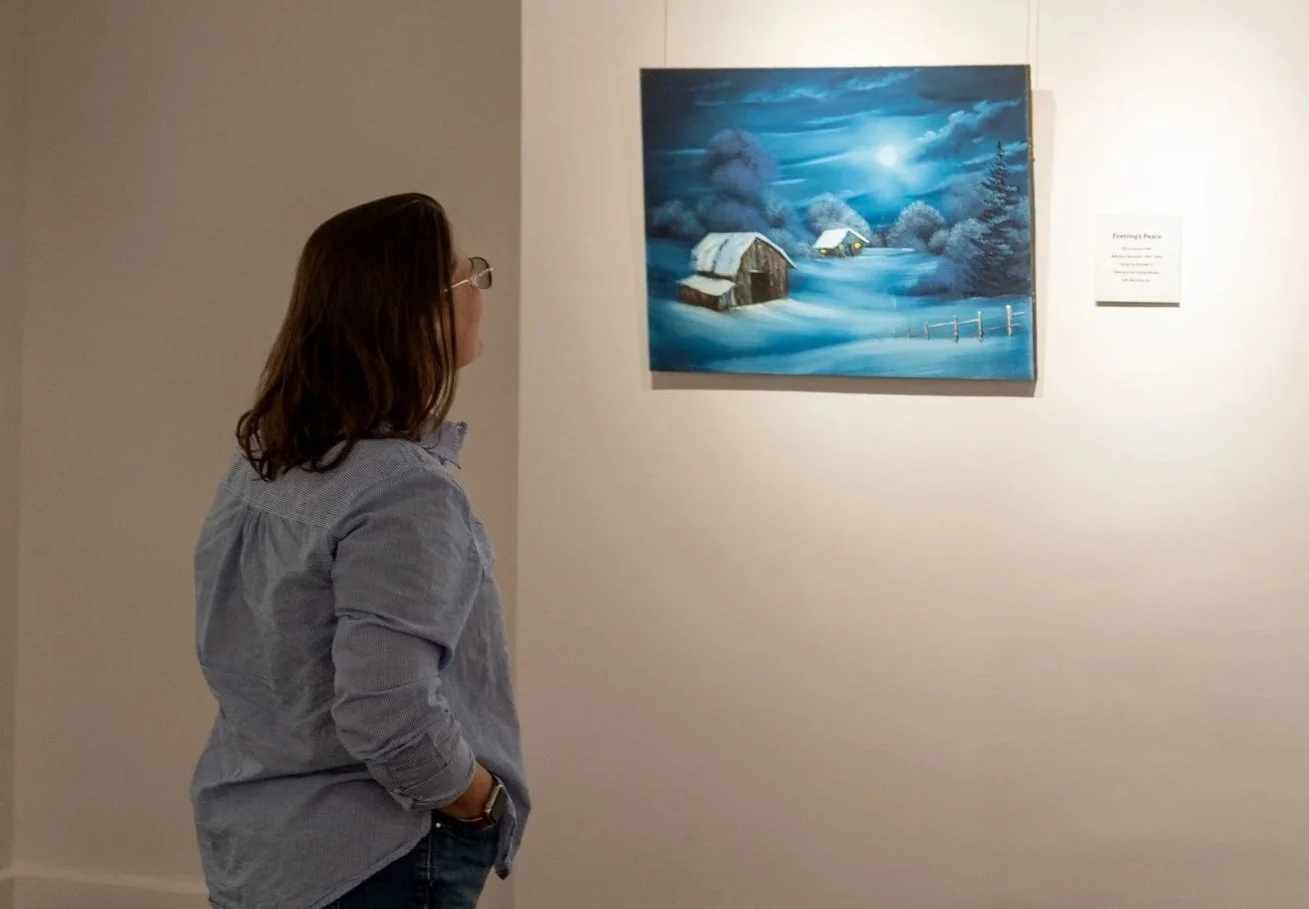
Recently, while walking through Minnetrista’s Bob Ross: Nestled Cabins exhibition, I found myself wondering how this show might feel to a college student encountering Bob Ross for the first time.
Many of us grew up with Bob Ross quietly painting landscapes on public television. His voice was calm, his brush moved quickly, and within minutes mountains, lakes, and forests would appear on the canvas. For those of us who remember that era, his paintings often come with a sense of nostalgia.
But imagine stepping into this gallery without that memory.
Imagine being a student balancing classes, deadlines, part-time jobs, and the constant pace of campus life. The world moves quickly, and quiet spaces can feel rare. Then you walk into a gallery filled with peaceful landscapes.
The Cabin as a Story
The Nestled Cabins exhibition highlights a small but meaningful detail in many of Bob Ross’s paintings: the cabin.
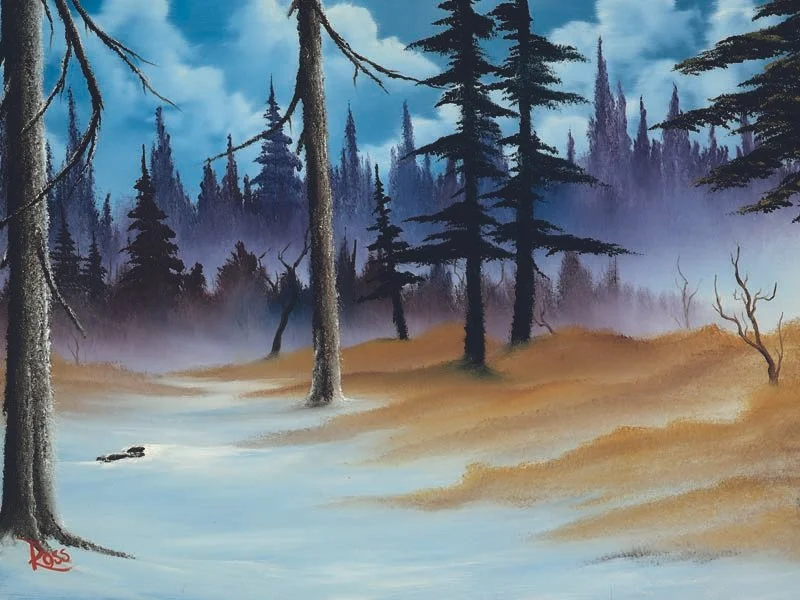
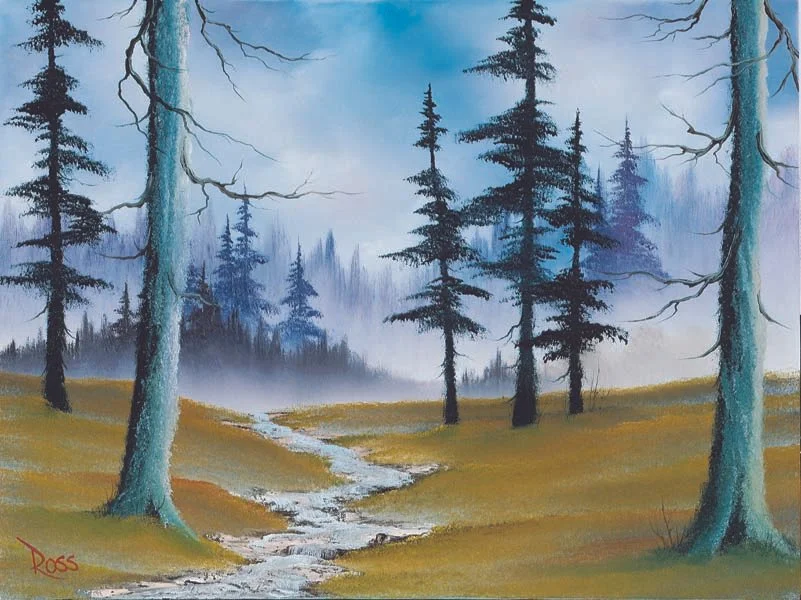
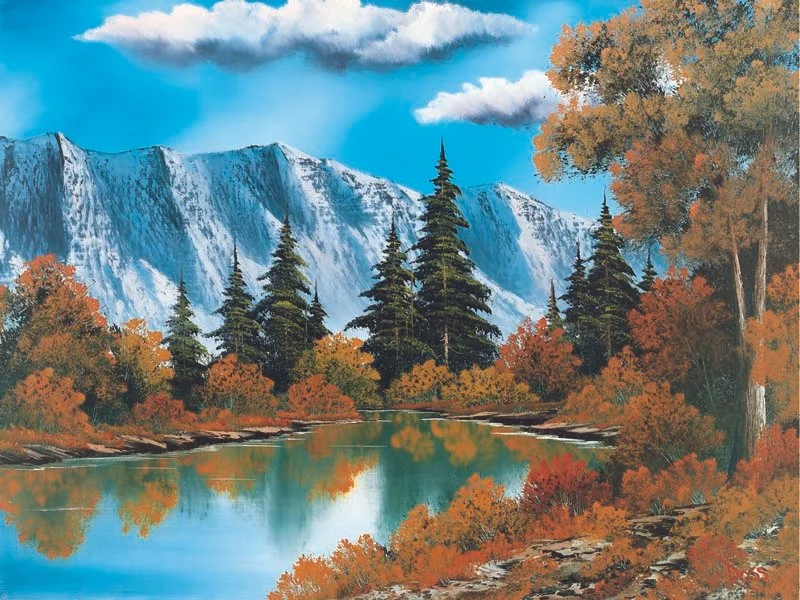
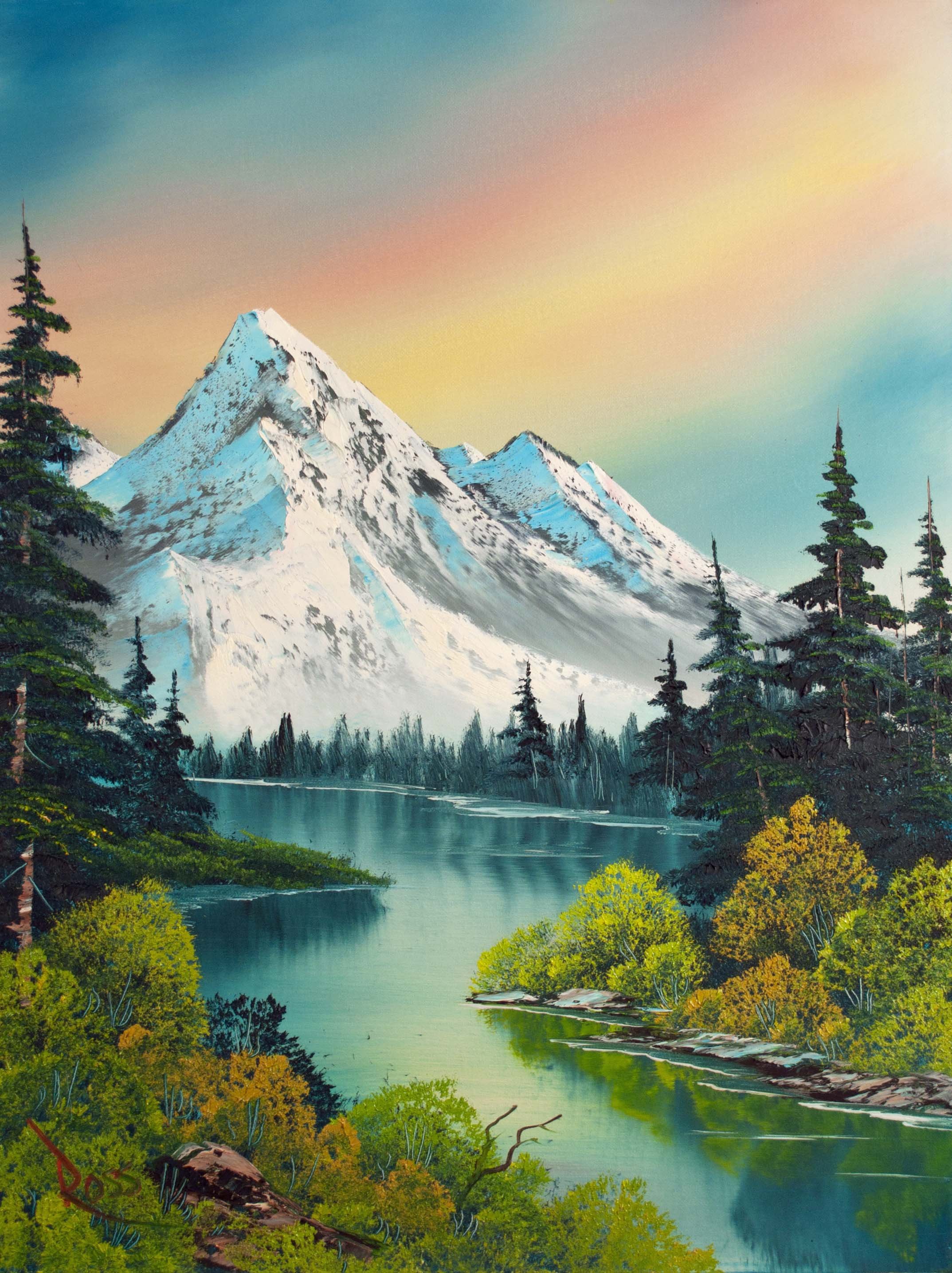
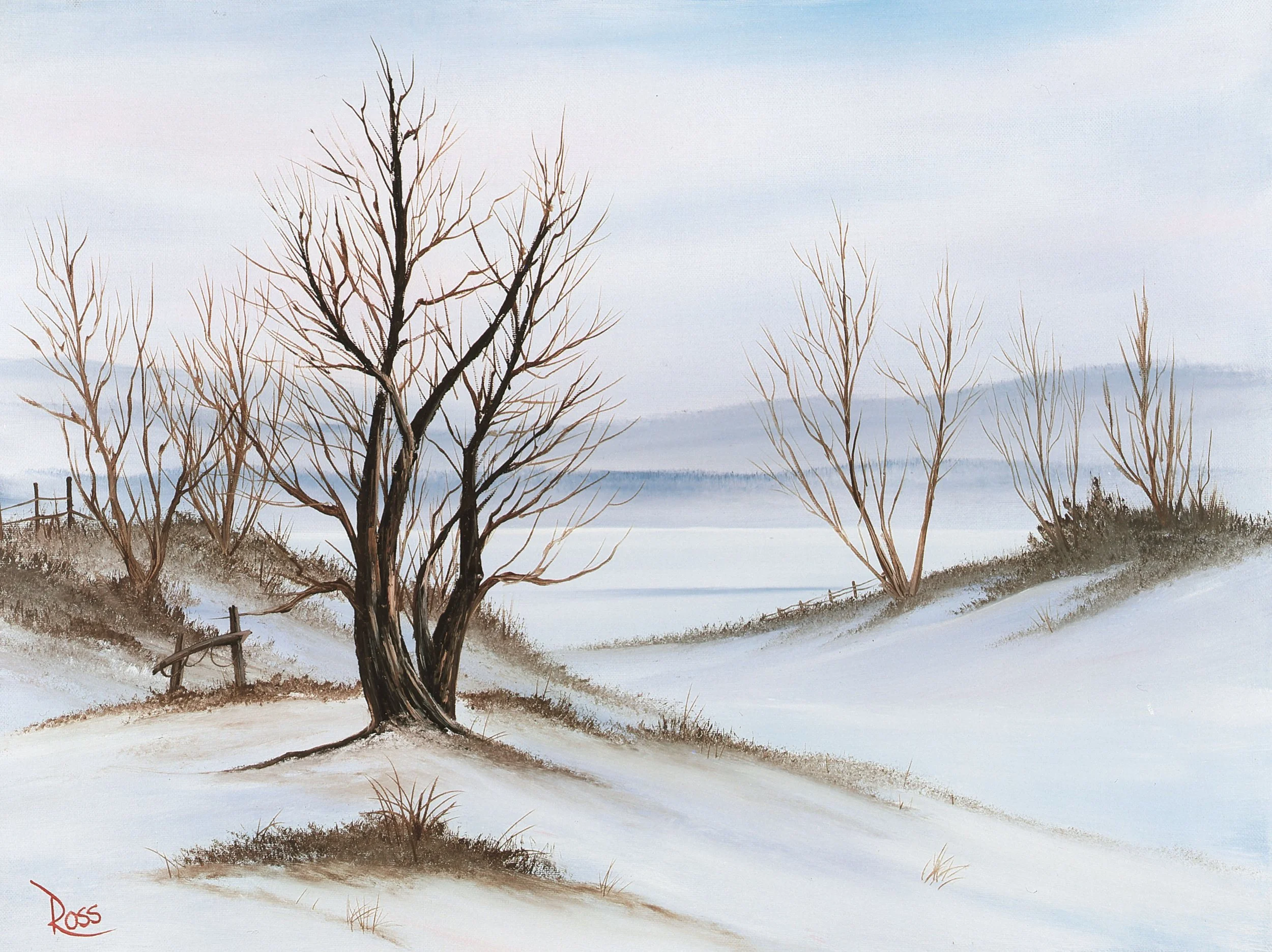
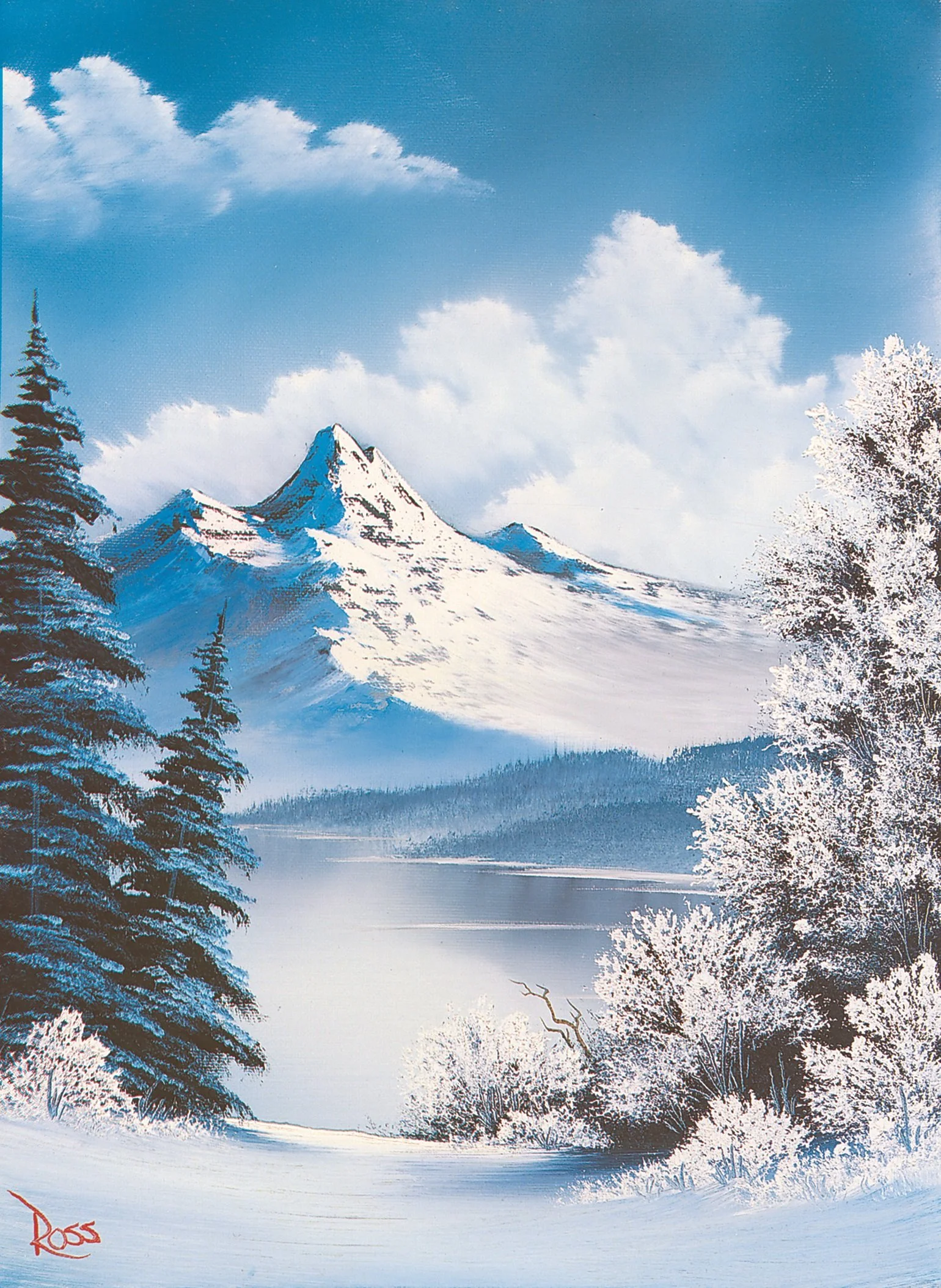
In most of his landscapes, nature dominates the scene—towering mountains, dense forests, and calm water reflecting the sky. But occasionally, tucked into that vast scenery, you’ll notice a small cabin.
It’s often the only sign that a human exists in the world Ross has created.
In this exhibition, those cabins become the center of attention. Each one rests quietly within its landscape—sometimes glowing with warm light, sometimes sitting beside a quiet lake, sometimes nearly hidden among the trees.
For a college student seeing these paintings up close, those cabins might spark a simple question: who lives there?
What would it feel like to wake up in that place? What would life look like if things moved at the pace of that quiet landscape?
Seeing the Paintings Up Close
Another thing that changes when you see these paintings in person is the detail.
On television, Bob Ross made painting look effortless. But standing in front of the work reveals something different. You notice the texture of the paint and the confidence in each brushstroke. The trees are layered with color and movement, and the water reflects light in ways that feel almost real.
You can also see how carefully the cabins are placed within each scene. They never overwhelm the landscape. Instead, they belong there—part of the environment rather than interrupting it.
That balance between nature and human presence is part of what makes Ross’s work so memorable.
A Different Kind of Pause
College life rarely leaves much room for stillness. Between schedules, expectations, and constant digital noise, moments of quiet reflection can be hard to find.
What’s striking about this exhibition is how naturally it creates that pause.
Visitors move more slowly through the gallery. Conversations soften. People spend a little longer with each painting than they expected.
For students especially, it can feel like stepping briefly outside the pace of everyday life.
Why Bob Ross Still Resonates
Bob Ross built his legacy on the idea that art should be approachable. His paintings were never meant to intimidate viewers or feel out of reach. Instead, they invited people to see beauty in simple landscapes and believe they could create something themselves.
That same spirit carries through the Nestled Cabins exhibition.
Whether someone grew up watching The Joy of Painting or is encountering Ross’s work for the first time, these paintings offer something simple but powerful: a quiet moment.
Sometimes all it takes is a small cabin, a calm lake, and a few happy little trees to remind us that slowing down—even briefly—can be its own kind of inspiration.
If you find yourself near the galleries at Minnetrista, take a moment to step inside and look closely. You might just discover that the quietest detail in a Bob Ross painting—the small cabin tucked into the trees—is also the one that stays with you the longest.
And for students curious to explore more, Minnetrista offers a $5 student membership with a valid student ID—an easy way to return to the galleries, enjoy exhibitions, and find a quiet moment on campus whenever you need it.