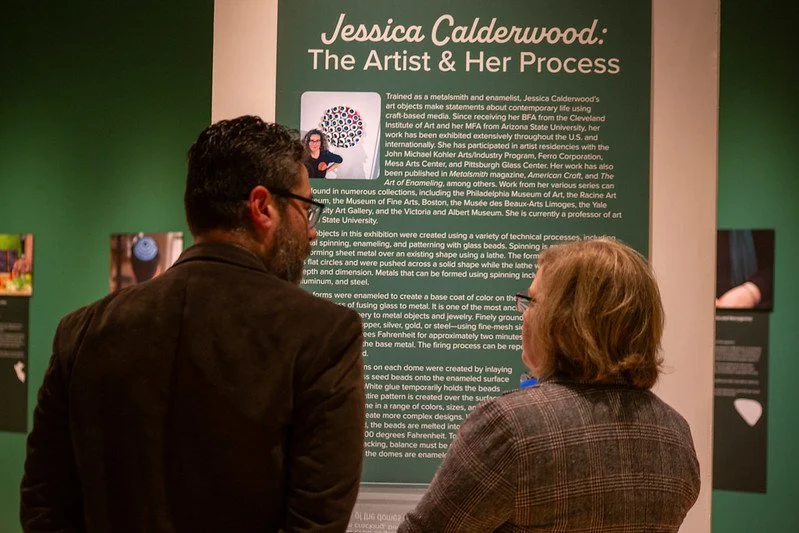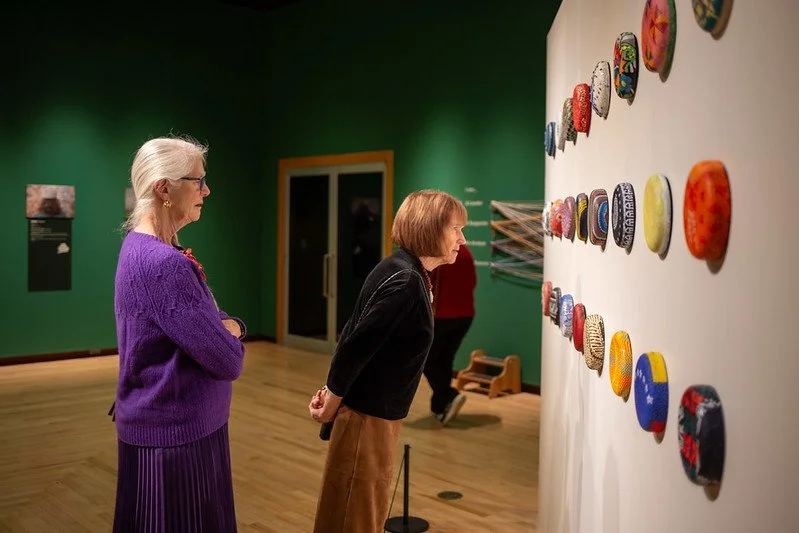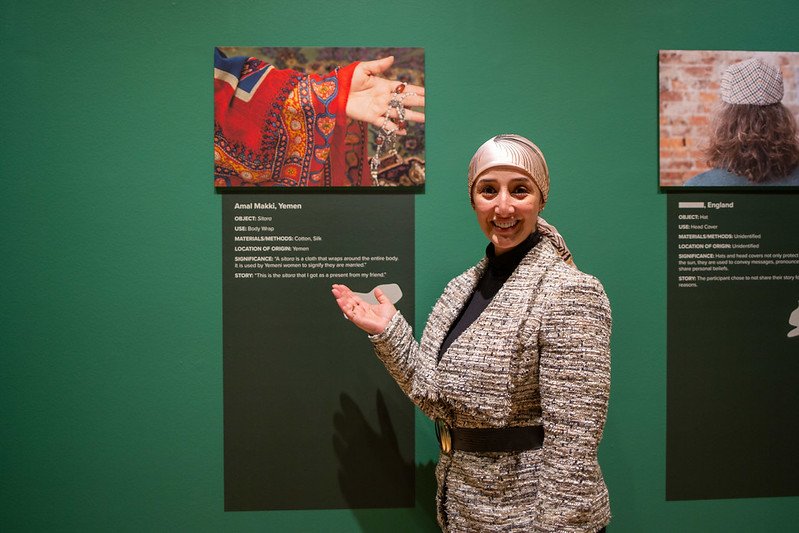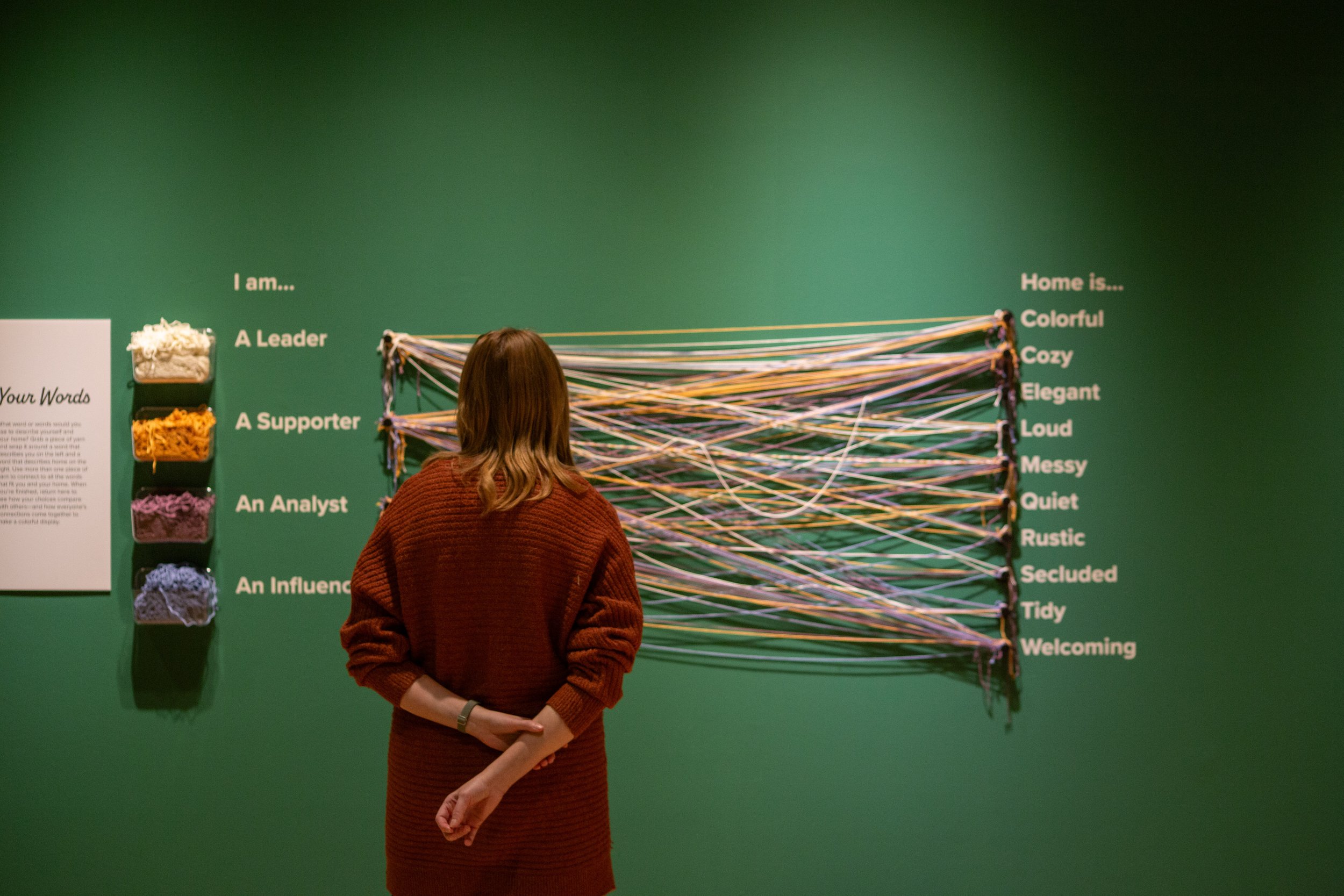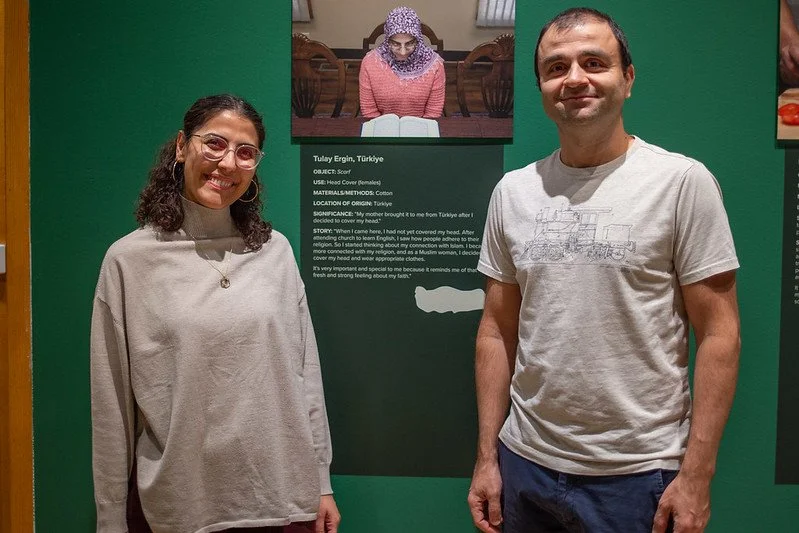
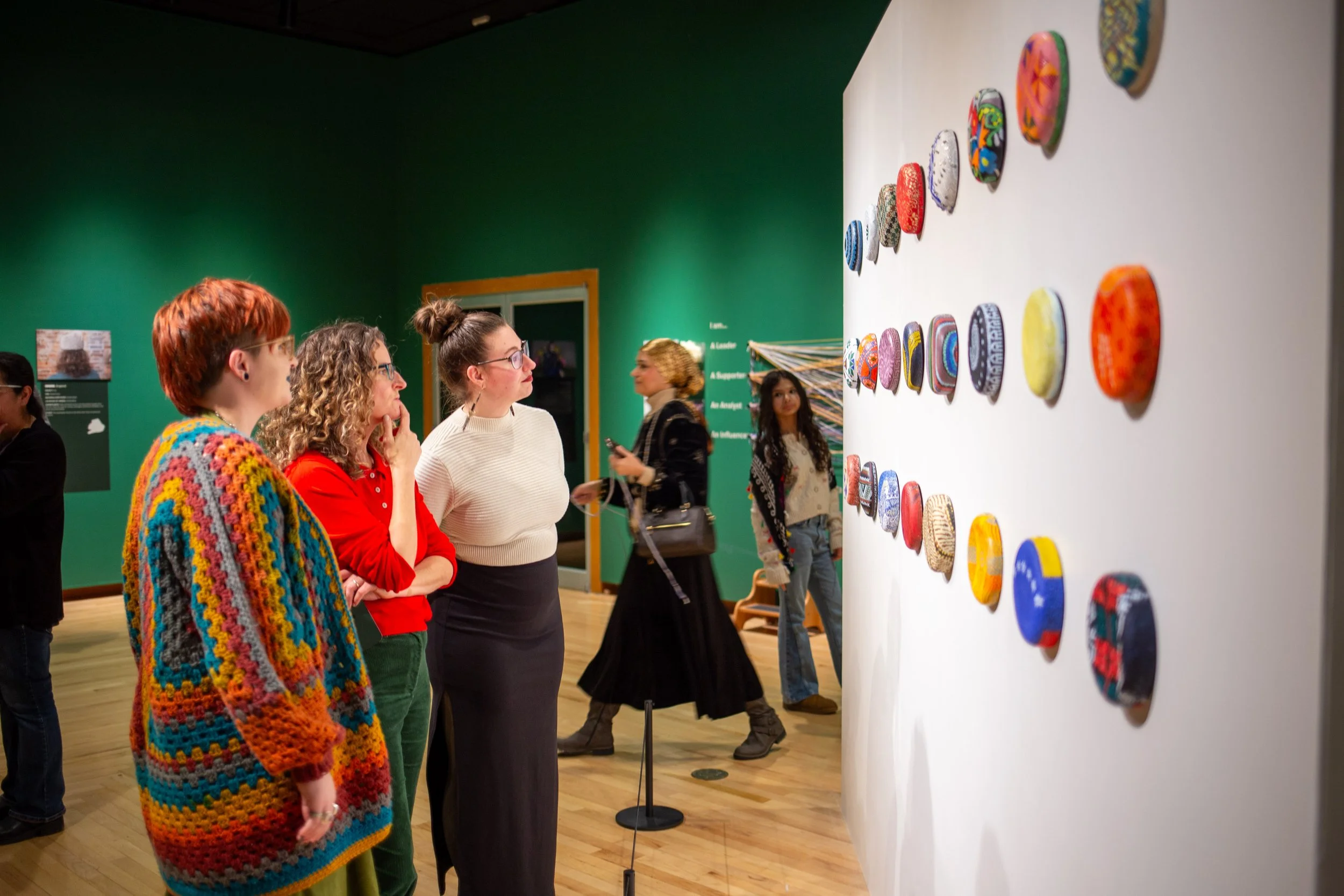
When art becomes a bridge between memory and meaning, it invites us to pause, reflect, and connect in unexpected ways. That’s the powerful experience at the heart of Minnetrista Museum & Gardens’ newest exhibition, Threads of Home—a heartfelt collection of work by metal and glass artist Jessica Calderwood. Drawing inspiration from the rich textile traditions of diverse families in East Central Indiana, Calderwood transforms delicate patterns and personal histories into enduring metal and enamel pieces that speak to the cultural threads woven through community life. Through this stunning visual narrative, she honors not just the craft of textile design but the stories of identity, belonging, and heritage that textiles carry with them.
In this exclusive Q&A, Calderwood reflects on the deeply collaborative process behind the exhibition—from gathering stories and heirloom textiles to thoughtfully translating thread and fabric into metal. She shares how conversations with community members shaped the direction of the work, how the permanence of enamel contrasts with the fragility of cloth, and why preserving these visual languages felt especially urgent. Through her insights, readers gain a behind-the-scenes look at the care, research, and craftsmanship that brought Threads of Home to life—and a deeper understanding of how art can safeguard the memories that define us.
Q: What sparked the idea for an exhibition centered on textiles from different countries?
A: I was initially inspired by a friend’s collection of carpets brought over from Yemen. I was fascinated by the craft, the colors, and patterns, as well as the effort it took to bring these objects halfway across the globe. They had special meaning for this family, so many stories associated with them. Change and movement is a part of our national identity. My husband is a first-generation immigrant, and I see the tension between existing in the present while also holding onto elements of one’s past. I saw the textile as the ideal vehicle through which to address this. I also wanted to highlight the diversity we have in this region through art objects and to educate the public about our growing community.
Q: Why did you choose textiles over other forms cultural expression?
A: Textiles are a universal fixture in every culture and region. They are used for comfort, solace, warmth, decoration, ritual…if you are moving, they are also easy to fold in your suitcase, so I thought it could be something that most people would have as a memento—perhaps something that was passed down through generations or used as a keepsake.
Q: Has working on this exhibition changed the way you think about textiles in contemporary life?
A: I had a lot of fun unpacking the design components in the textiles, especially the pieces with complex patterns. Now, whenever I see a pattern on a piece of clothing or a blanket, I immediately start thinking about how I would create these with glass beads. It’s a bit obsessive.
Q: What responsibilities come with interpreting cultural textiles for a broad public audience?
A: Respect and appreciation for all the participants, their cultural background, and the objects they chose to loan to me were at the forefront of my process. I had to do a lot of research to make sure I was representing everyone properly. Communication was also important. I made sure that each participant approved of the artwork and the text used in the exhibit.
Q: Was there a central question or theme guiding your design decisions? What was it?
A: This project required a lot of technical experimentation. Glass beads are melted on an enameled copper base. The seed bead essentially becomes a dot on the metal canvas. I was guided by the idea of pointillism to recreate the patterns but also considered the dot to be representative of a stitch. My goal was to take a fragment of the pattern and recreate it in glass and metals so there would be a bit of a “trick of the eye” effect, that one might perceive it as fabric. I find it intriguing to make a hard material appear soft to the eye.
Q: How did you decide which cultures or regions to include?
A: I didn’t decide that exactly… the project was by word of mouth. I started with one contact, who then recommended another, and they recommended another, so it was more about a network within our community. This is not meant to be a complete representation but more of a snapshot of an idea.
Q: What do you hope visitors gain from engaging with cultural textiles in this exhibition?
A: I would like visitors to this exhibition to learn a bit about my creative process, but ultimately the goal was to amplify diverse voices, to tell their relatable stories through textiles, and to remind everyone that there is more that unites us than divides us.